AI Data Center Cooling Innovations Shift Water Consumption Burden to Power Grids
New AI data center cooling technologies reduce local water usage but increase power plant water demands upstream.
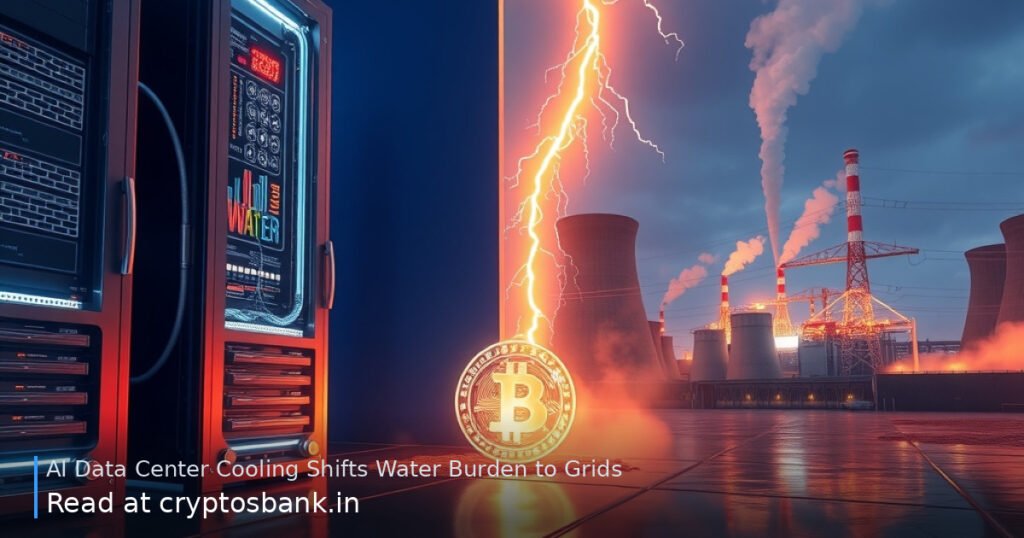
AI Data Center Cooling Innovations Shift Water Consumption Burden to Power Grids
New AI data center cooling technologies reduce local water usage but increase power plant water demands upstream.

The Indirect Impact of Advanced AI Data Center Cooling
Major technology operators including Nvidia, Microsoft, Amazon Web Services, and Meta are adopting new AI data center cooling methods designed to mitigate local water usage. Facilities are increasingly implementing closed-loop systems, air cooling, and immersion cooling to minimize the environmental impact at the facility level. However, research indicates that these systems require higher electricity consumption, effectively shifting the water burden upstream to thermal power plants that supply the energy grid.
Traditional data centers have relied heavily on evaporative cooling, where water absorbs heat directly from server hardware and evaporates into the atmosphere. While newer closed-loop systems circulate fluids repeatedly and immersion cooling submerges components in specialized liquids, both approaches elevate electrical demands. During peak operational conditions, closed-loop and liquid cooling mechanisms can increase facility electricity demand by 6% to 35% compared to conventional evaporative setups.
Power Generation Requirements and Water Footprint Metrics
The shift in power requirements comes as hardware intensity expands rapidly across the industry. Legacy data center infrastructure historically operated server racks at capacities between 6 kW and 10 kW, whereas modern artificial intelligence server racks routinely exceed 100 kW. This expansion in power density directly inflates the indirect water consumption tied to electricity generation.
Data from the Lawrence Berkeley National Laboratory shows that United States data centers directly consumed approximately 17.5 billion gallons of water in 2023. However, the indirect water consumption required to produce the electricity powering those facilities was estimated to be roughly 12 times higher than direct on-site cooling. Projections extending to 2030 suggest that electricity-related water usage could account for 50% to 72% of total data center water footprints under expanded artificial intelligence deployment scenarios.
Industry operators currently track efficiency through Water Usage Effectiveness, a metric measuring the liters of water consumed per kilowatt-hour of energy at the facility. Amazon Web Services reported a water usage effectiveness of 0.12 liters per kilowatt-hour, while Microsoft anticipates reaching 0.27 liters per kilowatt-hour by fiscal year 2025. Critics note that this standard metric strictly measures on-site consumption and fails to capture the significant water utilized upstream at power generation plants.
Regulatory Scrutiny and Policy Outlook in Key Regions
The indirect resource trade-offs associated with data center cooling systems are sparking broader policy discussions, particularly in high-density regions like Texas. Regulatory bodies including the Texas Commission on Environmental Quality and the Electric Reliability Council of Texas are evaluating how the growing energy demands of data facilities interact with regional grid capacity and water infrastructure.
Industry observers are closely monitoring potential legislative or executive actions from Texas Governor Greg Abbott, alongside potential utility audits and announcements from grid regulators. These institutional evaluations may determine whether local authorities implement moratoria or alter operational guidelines for future facility developments.
About The Author